
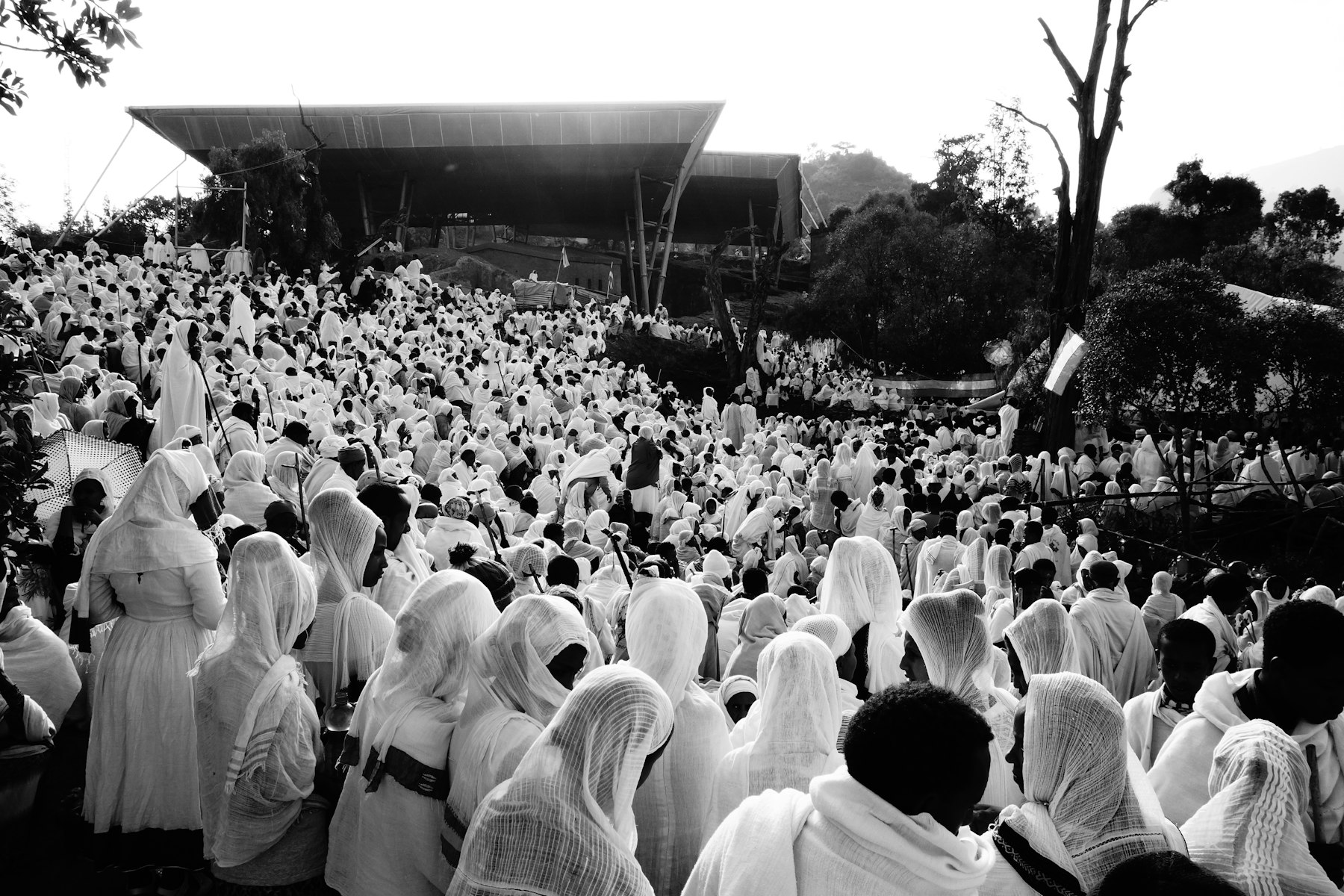
Ethiopian Orthodox Christians celebrate Christmas, Genna, on 7 January, and nowhere is it more moving than in Lalibela. In the days before, pilgrims arrive from across the country, many on foot, wrapped in white cotton shawls. On Christmas Eve they gather around the rock-hewn churches for a vigil that lasts all night.
The fast before the feast
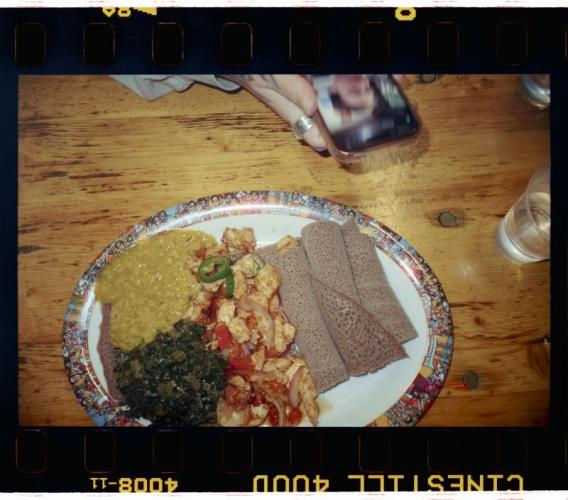
Genna is preceded by Tsome Nebiyat, the fast of the prophets, around forty days during which the faithful eat no animal products. On Christmas morning the fast is broken, at home, with doro wat, the slow-cooked chicken stew, and plenty of injera.
The night of 6 January
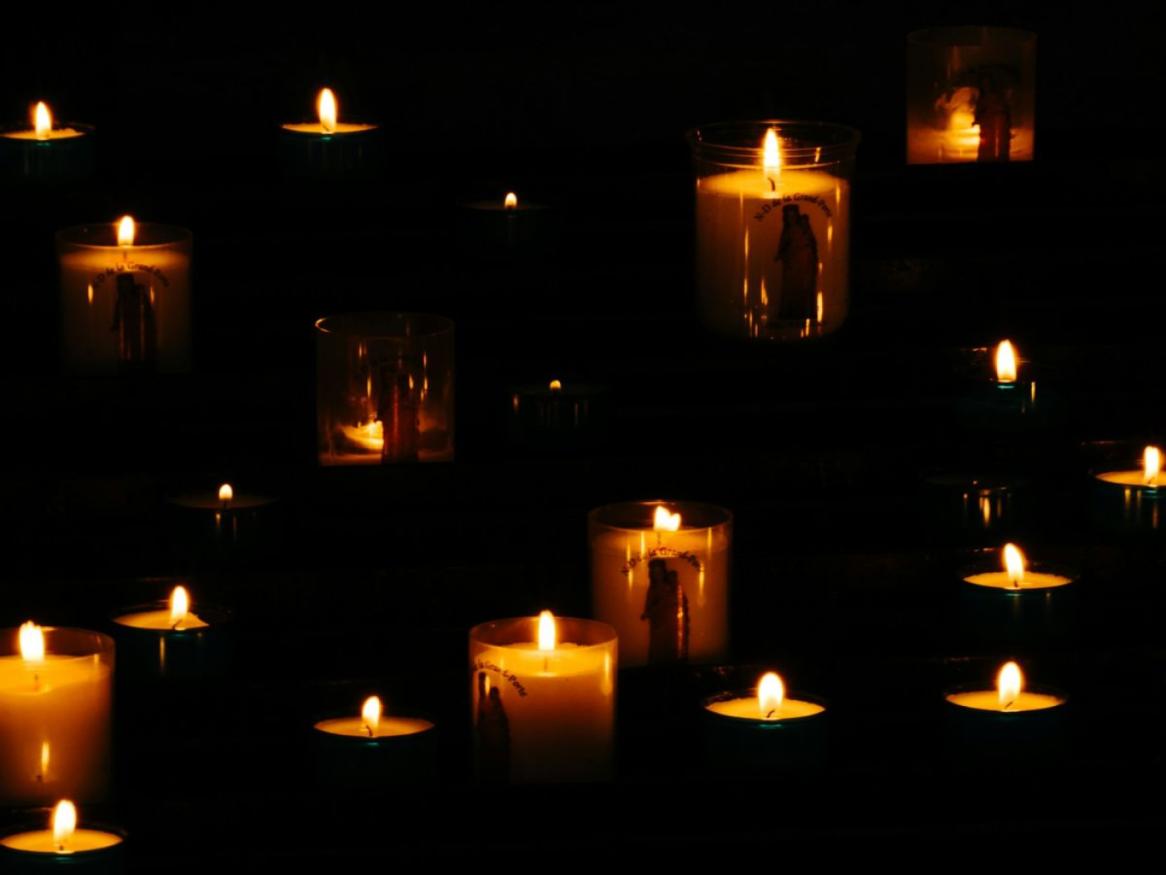
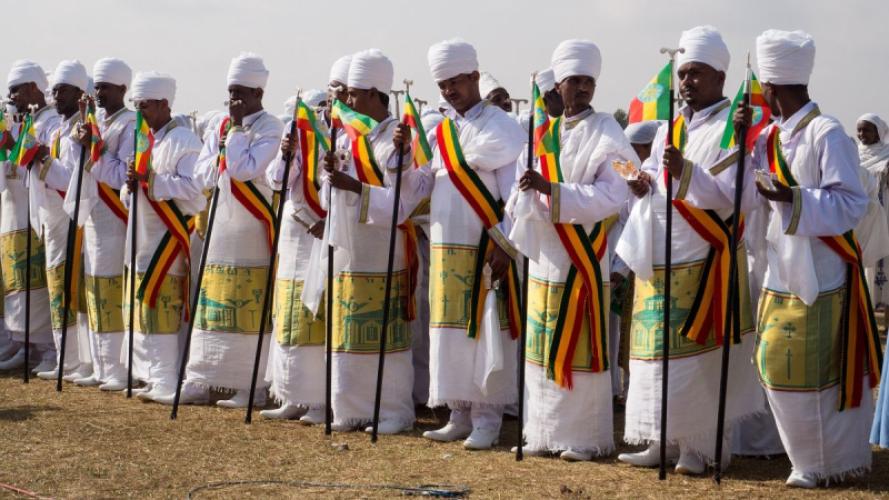
The heart of the celebration is around Bete Maryam and the churches of the northern group. Priests in embroidered robes chant and sway to the beat of drums and the rhythm of sistrums, while thousands of pilgrims fill the trenches and the rock ledges above, holding candles. The service continues until dawn.
Find a spot on the rim above the churches before dark, bring a warm layer and a little patience, and stay through the small hours. It is one of the great spiritual spectacles on earth.
Ganna, the game
In the countryside, young men traditionally play ganna on Christmas Day, a fast, rough game played with curved sticks and a wooden ball that gave the festival its name.
Planning your trip
- Book accommodation in Lalibela many months ahead; prices rise sharply for the festival.
- Domestic flights fill up too. Consider arriving a few days early and staying for the quieter days after.
- Wear modest, warm clothing. White is traditional, and a netela shawl is easy to buy locally.
- Photography is possible but be discreet. No flash, and never block pilgrims or priests.
- Combine Genna with Timkat on 19 January for the journey of a lifetime.

Comments
No comments yet. Questions about this trip are welcome too.